I bind unto myself today
The strong Name of the Trinity,
By invocation of the same,
The Three in One and One in Three.I bind this day to me for ever.
By power of faith, Christ's incarnation;
His baptism in the Jordan river;
His death on Cross for my salvation;
His bursting from the spicèd tomb;
His riding up the heavenly way;
His coming at the day of doom;*
I bind unto myself today.I bind unto myself the power
Of the great love of the cherubim;
The sweet 'well done' in judgment hour,
The service of the seraphim,
Confessors' faith, Apostles' word,
The Patriarchs' prayers, the Prophets' scrolls,
All good deeds done unto the Lord,
And purity of virgin souls.I bind unto myself today
The virtues of the starlit heaven,
The glorious sun's life-giving ray,
The whiteness of the moon at even,
The flashing of the lightning free,
The whirling wind's tempestuous shocks,
The stable earth, the deep salt sea,
Around the old eternal rocks.I bind unto myself today
The power of God to hold and lead,
His eye to watch, His might to stay,
His ear to hearken to my need.
The wisdom of my God to teach,
His hand to guide, His shield to ward,
The word of God to give me speech,
His heavenly host to be my guard.Against the demon snares of sin,
The vice that gives temptation force,
The natural lusts that war within,
The hostile men that mar my course;
Or few or many, far or nigh,
In every place and in all hours,
Against their fierce hostility,
I bind to me these holy powers.Against all Satan's spells and wiles,
Against false words of heresy,
Against the knowledge that defiles,
Against the heart's idolatry,
Against the wizard's evil craft,
Against the death wound and the burning,
The choking wave and the poisoned shaft,
Protect me, Christ, till Thy returning.Christ be with me, Christ within me,
Christ behind me, Christ before me,
Christ beside me, Christ to win me,
Christ to comfort and restore me.
Christ beneath me, Christ above me,
Christ in quiet, Christ in danger,
Christ in hearts of all that love me,
Christ in mouth of friend and stranger.I bind unto myself the Name,
The strong Name of the Trinity;
By invocation of the same.
The Three in One, and One in Three,
Of Whom all nature hath creation,
Eternal Father, Spirit, Word:
Praise to the Lord of my salvation,
Salvation is of Christ the Lord._______________________________________
Thursday, March 17, 2011
Arise with St. Patrick

Friday, December 19, 2008
My Life Out of Doors
Jason Aldean, "Amarillo Sky": Throughout this video, Jason Aldean includes scenes of family-operated farms and the wooden barns, fields of crops, farm-houses, tractors, and machinery that typify them. The farm machinery and buildings within the video are presented in a way that make the unique features of each farm and the tasks that distinguish them appear to be key parts of the residing family’s identities, a type of identity that many people from the Midwest who have grown up on or who have relatives with family farms have felt and can understand. As a little boy, most of my days, hours, and months were spent exploring the calf barns, helping my grandmother feed chickens, and riding along with my grandpa on his Oliver 1655 as we plowed and planted fields on the farm. From an outsider (city-person’s) point-of-view, many typical farm chores may appear tedious, messy, dangerous, and out-of-date. Using hand tools, carrying buckets of feed or water, and pushing, pulling, or lifting to get the job done are all types of human exertion that seem silly and unnecessary with modern machines, technologies, and their capabilities. Despite these slightly unappealing attributes, farms and the jobs that characterize them allowed me to enter into the work and learning oriented human world by giving me simple jobs like filling buckets with water, opening gates, and helping my grandpa navigate his tractor through the fields, and by answering my questions like "Where does milk come from?" "What sound does a pig make?" and "What happens if you touch a hot muffler?" The young men interviewed in the video and the images and lyrics used by Jason Aldean give the impression that I am not the only one whose first steps were taken and affinities were made on a family-operated farm.
Buddy Jewel, "Sweet Southern Comfort": Amid the clips of him singing and the views of his ideas about "Sweet Southern Comfort," Buddy Jewel adds excerpts of a young boy and an older gentlemen with fishing poles, tackle, and matching attire as they cast, laugh, and talk. The scene offers a glimpse of a young boy learning to use a new tool, object, or talent (in this case a fishing rod) through the teaching of a older person, most likely a relative, whom he looks up to; it is an experience that almost every person has had in some instance of their life. In grade school, I spent many of my weekends at small lakes and farm ponds with my father and his brothers learning to us the fishing rod and enclosed Shakespeare reel I was given as a Christmas gift. The rod was economical, made of low-grade fiberglass, and the enclosed Shakespeare reel was wound with four-pound, monofilament test-line meant for pan fishing; neither would have had a chance in a battle with a real lunker. They were comical compared to the Daiwa Baitcasting Reels and Pro Series Fishing Rods used by experienced anglers who wanted guaranteed precision and accuracy during their excursions. Regardless of the relatively low-quality of my equipment, I tested my father’s patience and felt like a professional as I forced him to untangle the knots, analyze my fishing stance, and remove from my hook each minuscule bluegill, perch, and crappie caught less than five feet from shore; my total number of fish always exceeded his, yet he was the only one who ever managed to catch a keeper. From the appearance of this video, Buddy Jewel may have experienced similar situations during his youth, or may have possibly provided this experience for a son or daughter of his own.
Darryl Worley, “Tennessee River Run”: Between video of Darryl Worley singing and driving boats around a lake a short clip of people jumping off a cliff and swinging on ropes into a small pond is inserted. The scenes provide the audience with an example of dare devil like actions that are often viewed as fun, thrilling and sometimes adventure. After discovering the opportunities a small creek or pond could offer to young elementary school aged boys, my summer weekends and days began to be spent down by Steven’s Creek which ran through our property. Steven's Creek, no more than fifteen feet wide, four foot deep, and with a current that was mostly unnoticeable, hardly appears to be a place to go thrill-seeking and courage testing. Its opportunities for rope swings, makeshift rafts and bridges, and jumps from its five or six foot banks likely required more imagination than the guts and bravery necessary for skydiving, hang-gliding, bungy jumping, and other more daring types of activities. Nevertheless, the childish daredevil activities that Steven’s Creek offered me and my friends allowed us to participate in thrilling adventures where we rafted white water rapids, scaled mountains, crossed rope bridges over deep canyons, and sailed between trees on jungle vines. From the clips in the video, specifically the cliff diving and rope swinging, it would seem that thrill seeking can be practiced in multiple ways with the extent of one’s imagination being the only limitation.
Kenny Rogers, “The Greatest”: In this video, Kenny Rogers sings for an audience, taking the perspective of a boy practicing baseball telling himself, “I am the greatest, the game is on the line, and he gives his all, one last time.” His words create a vision for the audience of boy alone on a baseball diamond, talking himself through each swing of his bat and throw of the ball in hopes of someday becoming the “greatest.” In junior high and high school, I shot an incalculable number of baskets in my driveway and ran an overwhelming number of miles on the road adjacent to our place telling myself, “You're the best shooter in the state,” and, “No one has the guts to run as fast or as hard as you.” It is common for teenagers to spend hours of time alone, telling themselves they are the "greatest" or imagining fantastical game situations while practicing to improve their athletic abilities in hopes of gaining popularity or with aspirations of becoming a high school, college, or even professional star. Many of these teenagers give up in the end, thinking or realizing it is not worth the effort, the solitude, or that their dreams are simply unreachable; however, the ones who do persevere and are able to continually “give their all one last time,” achieve their goals and give their time spent practicing reason. These same athletic aspirations, my own words of encouragement and empowerment, and the imaginary games and races I had against figures like Michael Jordan and Steve Prefontaine enabled me to persist through the lonely workouts in high school and my goals. From the sound of Kenny Roger’s words, it would seem that he, as well as many other people in the past, have had the desire like me to “give it their all” one more time than anyone had before them.
Marshall Tucker Band, "Bob Away My Blues": While singing the song “Bob Away My Blues” live on video, the Marshall Tucker Band uses the lyrics I’m gonna close my eyes and let that cork bob away my blues” when describing what he will do after going to the river. These words evoke an image in the audience of a man watching a bobber, but otherwise letting his mind explore daydreams and thoughts that are bothering him or on his mind. As high school classes, athletics and responsibilities grew more stressful and time consuming, my thoughts, ways to escape, relax and reset my energy became hiking, fishing and camping trips by myself to parts not far from home. Away from the trips, it is almost humorous to think a few hours alone could have been more fulfilling than spending time with family or friends; however, the benefits become evident when one understands what the solitary camping and fishing trips consisted of. The trips required no mental activity geared towards deadlines or priorities, but instead, let the mind wander whatever direction it pleased so long as it could complete the simple tasks of monitoring a bobber or telling the legs to take the next step. Although the trips may seem introverted or unsocial, their lack of rules, requirements, or essential activities enabled me to spend the time necessary for refining my beliefs about God, religion and live, debating the benefits, rewards and challenges of future occupations and for understanding who I am, what I enjoy and what I want to make out of the life I have. Upon the apparent meaning of the lyrics used by Marshall Tucker Band, it would seem that I was not the first or only one to turn to solitary activities for relaxation.
Travis Tritt; "Lord Have Mercy on the Working Man": Between shots of Travis Tritt singing and men and women working, excerpts of rolling coins of every size and value and dollar bills of multiple color and worth flash across the screen at different speeds and intervals. The forms of money flashing across the screen where men and women were working hard at blue color jobs just seconds before presents the audience with the idea that money is necessary in life and comes from working a job. As a high school student with empty pockets and soon to be a college student paying tuition, it became apparent that is was time to get a job and make some money; summer landscaping was the answer. Looking back at the $8.00/hour wage given for the types of manual labor involved, it is hard to imagine that the effort it required seemed worth it. Digging hundreds of feet for irrigation tiles, digging holes up to four feet deep for planting balled and burlapped trees, scooping countless shovels of landscape rock and mulch and climbing trees to remove with hand saws, not to mention the heat, mud, sweat, blisters and aching muscles that went with everything, hardly seems like a good way to make some extra money. However, the money that I made moving dirt and planting trees allowed me to attend the college of my choice, Nebraska Wesleyan University, while at the same time spending time outside in the fresh air that I loved that, characterized many of the activities I found most exiting in life, and that distinguished the way that I had spent most of my summers before. The video makes it seem that Travis Tritt and many others agree with me that money is necessary for choices in life, but the way money is made does not always have to be the same.
Reba MacEntire, "Is There Life Out There?": Near the end of the music video, after she has been sad because things seem to not be going her way, Reba is shown getting an A in the class and wearing a cap and gown. The cap and gown are recognizable to almost everyone as symbols of graduation ceremonies, which are often accompanied by diplomas and family gatherings. At the Pius X High School 2008 graduation ceremony, my graduation, two hundred and thirty- two other high school graduates, all wearing the same emerald green outfits, filled the stage of the Johnny Carson Theater at the Lied Center of Performing Arts with me. When looking at graduation ceremonies and the activities and traditions that accompany them, one might actually struggle to hold back a laugh while considering that graduation is an achievement that is supposed to separate people and recognize their individuality. Grouping together all the graduates wearing matching floor-length gowns and silly mortarboard caps hardly seems like the best way to embrace each's distinctiveness. Nevertheless, my graduation ceremony was a symbolic closure for the achievement of my high school goals, and an invitation to pursue my future career related goal involving a biology and environmental studies major that has been influenced by the outdoor activities including farming, working, camping, and fishing that have been integral parts in my personal growth and development. It would seem from the appearance of the video that graduation not only helped me pursue future goals, but most likely Reba and many others.
Thursday, December 11, 2008
Final Blog
Work-shopping was an aspect of this class that helped me see ways that I could improve my own writing style. By looking at both the good and bad aspects of my classmates styles, I was able to add to and delete from my own style in order to improve my writing.
One of the most important specific changes in my writing style that I have made during the semester was to build a different view of what writing and organization of writing is. At first, my writing was the typical 5 paragraph essay with an opening, body, and conclusion. However, I learned that it is not always necessary to write this way, and that often times it is better to branch out and use you own style. I learned that a writer's style and the way he presents information can often times be a more effective means of expressing views, opinions, or evoking thought. For example in the "St. Sebastian Cow" and the Essay Video on youtube.com, messages were expressed in very unique ways that are still considered writing. The authors used their own style to create this writing, and their unique styles are big reasons that their writing is considered good.
As for my own style, I am not entirely sure I've found it yet. I think I am still searching to find my own unique style and it will take more writing to understand how I enjoy writing and write best. I believe this semester allowed me to experiment with styles and aspects of styles, an important step in finding my style. Examples of my changing style can be seen in my blogs. In Whiskers, one of my final blogs I tackle the idea of my dad's whiskers and their implications in my life. This is a subject I would never have tackled or thought could have been a subject at the beginning of the semester. This is evident in my early blog Apples where I talk about why apples are funny.
Saturday, December 6, 2008
Whiskers!

Joel Schlautman's face (my dad) has been covered with whiskers for most of his life. His whiskers are mostly blond with mixed in with brown and reddish tones. My dad's whiskers were usually short and stubby, and felt similar to sandpaper when you rubbed a hand against them.
As a child, I remember sitting on my dad's lap and playing games with him. I looked up to him. I'd rub my had against his cheek and feel his whiskers, and he'd rub his face against mine scratching my cheeks. His whiskers were pathotic. They were an object of endearment, and seeing and feeling them as a small child made me know that I was loved and protected by my father.
As I grew, my dad grew into more of the discipliner and mentor that I needed as a young team. Instead of the feelings of love and protection that his whiskers once gave me, they now made me feel young. His whiskers were something I did not have, and they symbolized the knowledge and wisdom about life that I lacked and he had. In an effort to help me bcome a successful man and person, he forced this wisdom and judgement upon me, and it seemed that often times I didn't always want to hear it. His whiskers were on a face that would smile when I did something right, but would also frown when he was disappointed. The whiskers were what I looked to in order to judge whether the decisions I made were right or wrong.
Today, the whiskers are still on my dad's face, but once again they have changed in what they symbolize and the meaning they have in my life. I can now reach up, touch my face, and feel the my own short stubby whiskers. My whiskers remind me of his, they remind me of what I am becoming, an adult with the responsibilities that my dad had as a man, a husband, and a father. When I see his whiskers, I am reminded of the role he has played in my life, and the impact that he has had in my development into an adult with my own whiskers.

Friday, December 5, 2008
Grandfather Frog Stays in the Smiling Pool
 Photobucket" border="0">
A copy of "Grandfather Frog Stays in the Smiling Pool", written by Thorton W. Burgess in 1914, sits on top of a dresser. Besides the black sketch of Grandfather Frog sitting on his Lily Pad wearing a suit jacket and top-hat, the cover is a faded brown made up of visible criss-crossed fibers. It has an aged look, the cover lacks the boisterous colors, plastic outer cover, or computer generated graphics that characterize many of the books written in the past few decades. Its binding is loose, the corners of the cover are damaged with the fibers slightly unraveling like yarn in a woolen sweater, and its pages are creased and have some slight tears. The nearly 100 pages of the book are filled with more than noticeably large print and illustrations of Grandfather Frog and his other friends from the smiling pool have been illustrated on most of the pages by Harrison Cady.
The name Charles Brunnert is scrawled on the inside cover in an obviously childish cursive hand that contains glimpses and aspects of the elegant style that characterized the early 19th century. Charles Brunnert, my grandfather, received this as a Christmas gift when he was a child in the 1920's. It was the first book that he learned to read with the help of his mother Regina, the teacher at the one room school house in Argyle, MO. The words of the book and its images and stories of grandfather frog and his friends' adventures were some of the first to fill his mind.
Nearly 70 years later, when I was a child. The images and stories that fill this old brown covered book were the first that I read as well. I spent the summer with him and my grandmother the year before kindergarten helping/annoying them complete the simple tasks I was given on the farm. After the first few weeks, my grandfather decided that I was at the age where I should no how to read. "Grandfather Frog Stays in the Smiling Pool" was the first book he grabbed off the shelf, and we spent the rest of the summer evenings sitting in his chair letting Grandfather Frog teach me how to read just as he had taught my grandfather many years before.
|
|
|
|
|
|
|
|
|
|
|
|
Wednesday, December 3, 2008
Aermotor Windmill

On old Aeromotor Windmill stands in the pasture along my family's driveway. The windmill is about 25 feet tall and has fan blades that are about 6 feet in diameter. It's the smallest type of aeromotor windmill built to serve its function. At one time, its fan blades would spin constantly, pumping water from a well into a cattle tank to quench the thirst of grazing cattle, and long ago, before electricity had arrived on the farmstead, even people. As mentioned earlier, it was purchased in the early 1900's by my grandpa's father before electricity had reached the farmstead. It was then that it functioned as both the source of water for his family's water and his cattle's water. Even after electricity had arrived on the farm, it continued to serve as the source of water for the people up until shortly before my father was born. Then, a well was finally dug and hooked up to an electric pump. It's been through alot, its blades and tail fins are riddled with bullet holes from .22 rifles. It served as target practice for multiple generations of teenage boys. Some of the rungs of its ladder that lead up to the blade and generator box have broken or become detached, and a few of the legs and supports have been bent in accidents over the years.

Today, it no longer stands at the old farm where it lived most of its life, instead, its stands at our home in the pasture some 150 miles away from its original location. Its blades have been locked in place, no longer able to spin, and it no longer stands above a well from which it can pump water. Still, it serves a purpose. It has been given a shiny new coat of silver paint with red tips painted onto the ends of the blades, and the bends in its supports have been hammered back to nearly their original shape. Now it stands, alone in our pasture as simply something to look at. It is a symbol, a reminder, of the farmstead for my dad and his brothers that had sustained and been the lifeblood for our families over multiple generations. Although the farmstead is now sold and gone, they still recognize the importance it had in raising them and building our families into what they have become today. The windmill is all that remains as a symbol and reminder of those days.
Monday, December 1, 2008
Aaron's Ethos
 Photobucket" border="0">
In Aaron Carter's music video "I Want Candy," a rhetorical appeal to ethos is made through use of the rhetorical strategy of compare and contrast. This appeal is developed throughout the video in the comparisons of Aaron and Candy verses Aaron's three friends. On multiple occasions throughout the video, this appeal to ethos creates an appearance for Aaron and Candy that causes them to appear more mature than Aaron's friends. This is achieved by the places that each of them is placed within the video, and the behaviors shown being performed by each in those places. For example, at the movie theater, Aaron and Candy are sitting next to one another with no one around them. By their actions (i.e. smiles, touch, and conversational appearance) it is obvious that they are on a date. This is a very mature thing to be doing for Aaron and Candy's age of people. Conversely and comparatively, Aaron's friends are also at the movie; however, they appear to be less mature. They are sitting together but they happen to be all boys; therefore, they are not on a date. Furthermore, they are laughing, talking loudly, and throwing popcorn at Aaron and his date. This is very rude behavior and their lack of dates and practicing proper theater etiquette lead to a decreased appearance of their maturity and an increased appearance of Aaron and Candy's maturity through comparison of their actions.
Another time when this comparison leading to an ethotic appeal occurs while Aaron and Candy are again on a date, but this time they are in a restaurant eating. Aaron's friends are in the booth behind them. During dinner, while Aaron and Candy appear to be maturely having a conversation, his friends are laughing, making noise, and interrupting their date immaturely. The grimace or look of disgust on Candy's face makes the statement that this is not proper behavior or display of maturity and the comparison between the two groups once again builds an appeal to ethos.
Wednesday, November 26, 2008
Timothy Liu Extra Credit
This line had particular significance to me because of its reference to Nebraska, the Great Plains, and the relatively recent changes that humans have caused in this landscape. He makes a statement that connects the now with the past. Replacing the herds of Bison that characterized the Great Plains before it became the heartlands and cornbelt, are herds of barns, farms, and fields that displaced the bison and altered their livestyles. Although his statement may not have been meant for this reason within context, it was I immediately thought of when I heard it. It also made me reflect a little bit on the lifestyle that I and many people within the Midwest live.
Much of my family's income is based on farming the land that was taken from bison and entire prairie ecosystem. Prairie has basically disappeared from the Midwest, although the farms that replaced it are the source of food for much of our nation, it is frightening to think about what longterm negative effects this could have. What significane does the loss of species and ecosystems play in the success of the human race? Does each individual species really matter? Timothy Liu's statement sort of woke me up to the fact that humans can greatly alter landscapes and systems within the world. I have no opinion to how good or how bad this is. But I think it is necessary to think about what long term effects actions can have before they are undertaken.
Tuesday, November 25, 2008
Teenage Crushes: A Reflection on Aaron Carter's "I Want Candy"
First of all, can you look at Aaron Carter and not think PIMP?... Didn't think so.
Everyone can remember their first teenage crush. The time when they first realized they were actually attracted to a single member of the opposite sex. These crushes are often short lived and based on confusion in understanding the new feelings and emotions that come with a crush. Do you remember your first teenage crush or any teenage crush in particular?
I remember my first teenage crush was during the 6th grade on a girl I attended school with. She was the typical sporty, competitive, tomboyish type of grade school girl. She played football and basketball with the guys everyday during recess, and because of her jump start in the physical maturity category, she was taller, stronger, and beat most of the boys. However, she didn't stand a chance at beating me simply because of the sweet skills and human instinct I was born with. Anyways, that is beside the point. Turns out that I was on her list of people that she liked at the time and before we new it we heard head over heals in a serious grade school relationship similar to Aaron Carters. We sat together at lunch attempting to talk with one another about the nights upcoming homework assignments over the murmurs, giggles, and quick glances towards us by our friends. We would meet together on afternoons during the weekends, always bringing with us the protection of one or more of our friends of the same gender and play basketball on the play ground or attend movies. Than one weekend, I thought I hit the jack-pot. We met at the school playground as we had on numerous other occasions; however, this time we met alone. We decided to go on a real date and walked to the ice cream shop where we ate ice cream. It was amazing.
Unfortunately, a week or to later, we both realized that it was possible to be attracted to other people, and since we had rounded all the bases culminating with the precious ice cream moment and had no where to turn next, we decided it would be best for us to take a break and weigh our other options. Aaron Carter's video reminds me of this. It is fun to remember how thoughts involving pony-tailed girls bouncing around on the playground could have so contently filled my wandering daydreams in grade school. Even more humorous, are the memories of the activities like the movie dates with posses of friends as is seen in "I Want Candy." It is almost a right of passage into life and understanding how to control and find meaning in those crush based emotions while learning how to be the catch for that one lucky person.
"I Want Candy" by Aaron Carter: Brandon's Favorite Music Video
In this video we are introduced to a handsome Aaron Carter, and his teenage crush that "sets his heart on fire" Candy. Within the video, the editing and filming styles work/employ a relaxed or nonprofessional approach in appearance. Scenes within the video are deliberately made short and choppy with a lack of any clear cut smooth transitions. In general, the angles used in the filming are abstract/tilted as if taken using a home video. This home video appearing aspect is important to the overall argument of the hybrid text. This quality helps to create and tell the story of Aaron and his teenage crush on candy through his youthful eyes. In the opening phone conversation, a pathetic appeal is created that causes Aaron to appear nervous yet excited for his date with Candy. Through this pathetic appeal and the seemingly unprofessional methods of filming, the youthfulness that characterizes Aaron and Candy's relationship, one that is present in nearly all teenage crush based relationships, is developed as we see them attempting to participate in romantic activities.
Within the video there is a recurring pattern of Aaron's friends habits of busting his and Candy's romantic moments. This may be an attempt to develop an effective ethos in Aaron's favor, by showing his ability to have friends but also his maturity level that may be slightly higher than theirs because he is on the date. Furthermore, the introduction of Aaron's friends and there frequent busting/tampering in of Aaron and Candies moments of romance my expand the argument of the youthfulness that is present in Aaron and Candies relationship. This is mainly a result of the friendships that appear to be strong between Aaron and his still youthful and immature appearing friends.
Sunday, November 23, 2008
Tuesday, November 18, 2008
"The Problem We All Live With"

For many Americans, the 1950’s and 60’s contain memories of the fears and confusions created by the Cold War. But for some, these years hold memories of a war against racism that was fought at home within American borders known as the Modern Civil Rights Movement. The names of many African Americans, such as Martin Luther King Jr., Rosa Parks, Malcolm X, and Ruby Bridges, have been engraved into U.S. History for the roles they played in the movement. The 1954 case, Brown vs. board of education, and the 1964 Civil Rights Act signed by President Johnson held that racial segregation in schools was unconstitutional and prohibited discrimination against people of all types, it overturned the 1896 Plessy vs. Ferguson case, and provided the federal government with the power to enforce desegregation (Brunner). Each of these people, acts, and cases contributed to the argument that differences in race, skin color, or culture do not point to inferior or superiority; instead, they are simply differences. However, the idea that these differences are not bad, but in fact essential, is often overlooked. If everyone in a particular community fit the same role, the community as a body or whole would be missing parts that are necessary for its functionality. Therefore, each unique part is required for the overall success of a community.
In 1964, within some of the most violent years of the modern civil rights movement, artist Norman Rockwell painted the portrait titled, The Problem We All Live With. This portrait depicts the image of Ruby Bridges, a young African American schoolgirl, being escorted to a formerly all white school by four U.S. Marshals. Ruby Bridges was chosen by the National Association for the Advancement of Colored People (NAACP) to be one of the first young black students to enter into the all white public schools of New Orleans as a way for the federal government to enforce the rulings of Brown vs. board of education ("The Problem"). It is this rare situation or moment that Norman Rockwell captures and freezes in time through his visual rhetoric. However, the portrait does not simply narrate the situation taking place. Through the use of the rhetorical strategy of analogy, Rockwell’s portrait makes a rhetorical appeal to pathos that argues that the failure of different people and parts to function together leads to violent disfunctionality in the body or group as a whole.

The visual cues in The Problem We All Live With create an analogy that compares the situation of Ruby Bridges and the Modern Civil Rights Movement to war. The cause of war in general usually involves one group’s inability to live in association with another. Each feels like they have or deserve certain rights that cannot be taken from them; however, in most cases, these groups are selfish and want to keep freedoms and rights to themselves rather than to experience freedom in conjunction with numerous groups. This inability to accept that people could be functional parts of society despite their differences was the main cause of racism and the Modern Civil Rights Movement. Whites felt they could not be free while blacks were given similar rights and freedoms, and blacks felt that they were being suppressed from the freedoms they deserved. The result, according to this portrait, was war.

The arrangement of the tomato and the cracked, broken down wall it is splattered upon plays an important role in the portrayal of this scene as one that is analogous to war. The dark red, circular, splatter pattern left by the tomato looks eerily similar to human blood splattered from a bullet wound or some other war related injury. The wall’s cracked and holey look contribute to this analogy of war because it appears to have been riddled with bullets and mortars. By creating this analogy, a pathetic appeal of intense emotion is created. With war often come extreme feelings of pain, anger, hatred, sorrow, and resentment, all of which are created by the visual rhetorical strategy of analogy in The Problem We All Live With. These emotions are essential to the painting’s attempt to persuade the viewer to accept its main argument that inabilities within or between groups to accept differences, in this case racism, can ultimately lead to the pain and hatred often experienced in war.

The word “nigger,” which is scrawled graffiti style on the wall behind Ruby Bridges, continues this pathetic appeal to the audience by evoking even more intense feelings of emotion. “Nigger” is an extremely powerful word capable of evoking emotions on its own that is not commonly used in everyday language. It brings with it connotations of hatred, pain, and resentment towards blacks that is directly linked to black racism in America. By using this word, the viewer is shown that racism is the “problem” and reason for the analogous war taking place. Although no white protesters are depicted, their presence can be assumed due to the context with which the portrait was painted. It is obvious that the hatred and resentment that characterize the racism in the word “nigger” and that are analogous with the feelings associated with war are directed towards Ruby Bridges.
 She is arranged in the center of the portrait and its action; the contrast of her dark skin with the white dress she is wearing causes her to standout in the otherwise dull brown and grey colors that typify the portrait. The pathetic appeal taking place in this rhetorical situation seems to force the viewer to pick a side in the war. Join the protesters and fight for the right to allow segregation and keep the different parts separated, or join the U.S. Marshals and fight to protect and embrace uniqueness.
America has prided itself as being the land of freedom for all, full of diversity, and epitomized by a culture comprised of traditions that stem from nearly every part of the world. However, it is apparent that many of the prejudices of peoples from past countries have been integrated into the American culture along with those bigotries that have been developed within the United States. According to The Problem We All Live With, these biases are the cause of violent disunity within a group or entire nation. In 1 Corinthians 12, St. Paul says, “If a foot should say, ‘Because I am not a hand I do not belong to the body,’ it does not for this reason belong any less to the body… But as it is, God placed the parts, each one of them, in the body as he intended. If they were all one part, where would the body be?… The eye cannot say to the hand, ‘I do not need you,’ Indeed, the parts of the body that seem to be weaker are all the more necessary… so that there may be no division in the body, but that the parts may have the same concern with one another.” Therefore, it can be argued that to truly reach its potential success, Americans need to leave their preconceived notions behind and embrace the various ethnicities, skin colors, and distinctive parts that encompass their countries’ body.
Brunner, Borgna, and Elissa Haney. "Civil Rights Movement Timeline." Infoplease. 2007.
Pearson Education. 19 Nov. 2008
""The Problem We All Live With"" City of Troy. 30 Apr. 2004. 19 Nov. 2008
Sunday, November 9, 2008
Norman Rockwell
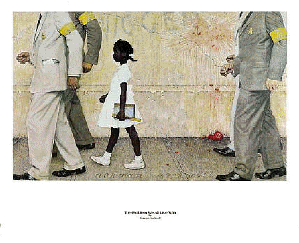
This portrait titled, The Problems We All Live With, was painted in 1964 by artist Norman Rockwell. This painting, although not seemingly significant by the first glance, gains much more importance with an increase in understanding of the particular cultural context in which it was written. Norman Rockwell did not simply paint this picture for aesthetic appeals, it was painted with purposeful visual argument to create an argument about the current situations about the time.
In 1954, the case Brown vs. Board of Education, the case 1896 Plessy vs. Ferguson which allowed for segregation of blacks and whites was overturned (http://brownvboard.org/summary/). Whites and blacks were no longer to be forced to attend separate schools. However, due to many racial feelings and tensions still present in the Southern United States, many schools and towns failed to enforce this court decision, and segregation was still a very real part of daily life for blacks in these times. This time is also characterized by the movements of famous African Americans like Martin Luther King Jr. who were influential in the civil rights movement. However, this painting deals more specifically with the story of Ruby Bridges.
Ruby Bridges was chosen by the http://www.naacp.org/ to be one of the first young black students to enter into the all white public schools as a way to enforce the rulings of Brown vs. Board of Eduacation (http://www.ci.troy.mi.us/law/LawDay2004/TheProblem.asp). It is this rare situation or moment that Norman Rockwell is able to capture and freeze in time in his visual rhetoric.
Through many means of visual cues, Rockwell depicts the scene of Ruby Bridges walking to school and manages to capture the feelings of emotion of the angry whites, as well as the awkwardeness of the situation. The splattered tomato, often thrown in the culture of this time by audience members who disapprove of the performance being acted out, is a subtle but effective reminder of the displeasure most of the whites found in this government action. The word "nigger" scrawled on the wall in graffiti style behind ruby, also culturally significant since it is a word very deragatory of African Americans, also contributes to develop and argue the feelings of tension in the audiencs. Even the white dress ruby is wearing contrasts with the color of her own skin, in some ways pointing out that that is the sole issue of the situation. The men in suits function as governemental aid that is necessary to "force" this action. Even the title of the painting, The Problems We All Live With, plays a significant role in the argument.
Interestingly, all these visual cues that are part of the text and significant through the cultural context can be interepreted in many ways by the audience. The "problems" to the audience could be the feelings of racism towards the black that the blacks have to deal with, or they can also be the feelings of being wronged or stolen from that many of the whites may have felt.
Monday, November 3, 2008
Sunday, November 2, 2008
Clay Dyer is an absolutely amazing person. What an inspirational person. He is a professional bass fisherman, and a very good one. The thing that is so amazing about him is that he does all this without any arms and legs. He uses every part of himself to go fishing, he holds nothing back, doesn't need any motivation, except for himself.
He doesn't let his disabilities get to him. He makes good out of the unfortunate events in his life.
Inevitably, there is a garbage truck in each person's life. At some time in each person's life, this garbage truck is going to back up and dump its trash all over you. It is going to limit each person in their own special way. Each person has a choice to either sit in the garbage, and stink, smell, and rot just like that garbage and become garbage; or, they can use that garbage, over come that garbage, make good out of that garbage just like Clay Dyer has. His garbage, his series of unfortunate events seem overcomeable to most people. But he has overcome his garbage in such a dramatic fashion that he can be an inspiration in almost every person's life. He can inspire people to look at what they've got, and rejoice in those gifts and use them to do good things.
There are two verses in the Bible that I am reminded of when thinking about Clay Dyer. The first is Luke 12:48 "To whom much is given much is expected." the second is from 1 Corinthians and it is the verse about their being many parts but only one body. I think that Clay fits these verses very well, and in some ways can make many people feel guilty. Most people would agree that they have been given much more in their lives than Clay, but they haven't done anything as impressive as he. Clay has also played his role in the body (community), very well. He has played the role of an inspirer in the body, maybe you could call him adrenaline. He inspires people to use their gifts to benefit the body just like Clay has.
Sunday, October 26, 2008
Sarah Palin
The 2007 Vice-Presidential was at Washington University in St. Louis University. Random fact, my best friend from high school goes to Wash U and is in an A Capella singing group on campus. The group wrote a song about this years campaigns and upcoming elections. NBC's morning show crew was on campus the morning before the debate and the group got to sing on the show. So my best friend was on National Television for 1:42 seconds!
Anyways, the debate followed my friends prime time and the question was asked, "Due to the recent bailout plan, what promises that you've made are you going to be unable to keep." Sarah Palin did a great job developing and employing her use of pathos in addressing and answering this question.
First of all she created various feelings of repungence towards Senator Obama and his running mate Senator Biden. Occasions where she created this feeling often resulted through her emphasis of specific words while describing events about the energy crisis. She said, "THAT'S what gave those oil companies those tax breaks." She places emphasis and clearly pronounces that word that's while refering to Obama's vote for the 2005 energy plan which creates the idea that Obama was directly related to the problems that resulted from the plan. Therefore, by her use of a negative tone of words and emphasis on particular ones, she creates a feeling or mood of resentment towards senator Obama. The emotion that she has presented and created create a motivation for a reaction in the audience that wants to move away from Senator Obama and the particular ideas and issues that he stands for according to Palin.
She immediately follows this by describing how she had to break up the monopolies of the big oil companies in her state that resulted from the plan. She continues to place emphasis on particular words in this dialogue, particularly the words "I and my." At one point she says, "I had to turn things around, ... [and] I had to say, 'You know the people are going to come first. Taxbreaks aren't going to come to big multinational coorporations when they adversely affect people." This use of the word I is slightly connected to her use of ethos, but it has an overall pathotic effect. She creates a feeling of desire in the audience by her use of first person. People experiences of attractiveness or being drawn to Palin because she seems to have all the answers and to be doing the right things. Palin further builds on these feelings on the audience and in a way stamps those feelings with legitamacy by bringing in her own feelings about things that "adversely affect people." To the audience, the are the people. They are the ones that Obama and multinational businesses are surpressing. Therefore, a slight emotional patriotism seems to arise. The audience feels that by moving away from Obama and towards Palin not only will they be helping themselves, bu they will be helping the country and all the other citizens of the U.S. in the right directions.
Towards the end of her answer, Palin is able to further affirm the desires, resentments, and feelings she has created for the audience by displaying some of her own emotions. She uses a joke "How long have I been at this, five weeks?" to ethotically build pathotic feelings of humor. She creates an image of herself as a normal person, like the rest of the audience. This helps to further explain and legitimize her use of words such as "for the good of the country" and for the "people" because unlike the dull politicians, Obama and Biden, she is a person and knows what the audience is going through. She therefore creates an emotional feeling of connection and understanding in the audience to finish of her answer. Palins use of pathos is firmly evident in her answer, and it is exceptionally well developed.
Tuesday, October 21, 2008
FinalDebate: Question Roe vs. Wade
In the third and final presidential debate, Senators McCain and Obama, the final two presidential candidates, were asked for their opinion about Roe v. Wade, and how that opinion would effect decisions in selecting supreme court justices during their possible presidential term. Each candidate used applied ethos, pathos, and logos in a slightly different manner. Much of this seemed to be based on their particular personalities and their overall outlook on the issue at hand.
Senator McCain seemed to rely heavily on the employment of ethos and pathos. He employs ethos, the use of his own legitimacy, very strongly and consistently throughout his answer. He persuades the audience by stating who he is, how he feels, and how those feelings will affect his decisions. Throughout his answer, he constantly builds up this idea of him as a the president by saying things like, "I believe, I did, I voted, I am. " He tells the audience exactly how he feels about the subject. One particular example of McCain building upon his ethos is when he says, "I voted for justice." He implies here that he made the right decision and can continue to make those decisions.
In doing this he is also strongly providing pathos to his persuasion. His use of first person, and the tone of voice he uses makes it seem that this issue is important to him personally as a U.S. citizen rather than simply the election process. His use of I depicts a picture of himself that fully illustrates the fact that Roe v Wade is wrong, and he even goes as far to say that he does not believe a person in favor of abortion can be qualified as a Supreme Court Justice. The inflections of his voice, and his movements of his hands (the little two finger scrunch thing to say Obama afraid of so called conservative judges) further help to create this emotional outpouring in McCain's answer that is easy to grasp upon and evoke feelings of sympathy in the audience.
McCain does use logos a little in his persuasion, but nearly as much as Senator Obama. His logic comes in while he is stating that elections and nominations of Supreme Court justices a very important things and that they impact the overall out look of our nation. He brings in reasoning at another moment of his answer when he says that he would base his nominations of Supreme Court justices on their qualifications. This seems very logical to pick someone based upon their past qualifications rather then their genetic or intelligent potential.
Obama employs logos as his main tool in his persuasion. He continually applies to logic by his statement of facts and their applications to the Constitution and his use of a more passive tone. He does not seem to be emotionally excited and personally into this question like Senator McCain had been. He keeps an even tone without raising or inflecting his voice to apply emotional appeal to any particular detail. He uses eloquent yet simple language that also helps his persuasion through logos.
By presenting a point in third person, "It is true this is," rather than presenting something as I believe or think, he makes his facts seem more legitimate he builds his ethos. He sounds informed. It seems like he doesn't have a particular opinion about the issue in a yes or no manner. He simply has facts and evidence that are his knowledge and his opinion. To him they are indisputable and, therefore, he is unable to believe anything else. This use of ethos and logos appeals to the audience because it persuasively paints an image of Obama as a president who makes decision based on facts and statistics rather than his own opinions.
Although Obama rarely uses pathos or emotional appeal into his persuasion, near the end of his answer he tells the story of Louey Ledbetter. He describes her undesirable situation in life caused by unfairness created through a lack of responsibility in the U.S. governmental decision. He uses this story to build feelings of sympathy for this woman rather than himself. This becomes very effective as he turns these feelings of sympathy into resentment towards McCain when he says that McCain voted against supporting her, while he voted in support of her.
Each candidate chose a different rhetorical path in answering the question. Obama chose the smooth talking all business no nonsense logical route, while McCain chose the emotional and personal opinion route depicting this issue as one that effects everyone including him, a seemingly typical American Citizen. It is not apparent which candidate's use of rhetoric was more effective, it is simply apparent that each's differed.
Thursday, October 16, 2008
Chapter 1 & 2 Questions
1) How do you know what strategies will work to convince your audience? Do you appeal more to emotions, logic, or something entirely different?
2) Hybrid Texts- Why are they effective? How does combinging images and words work as a strategy of appeal? Do images convey more information than text?
3) Visual arguments: different viewers make different interpretations, I always thought that people liked books more than movies because they visualized and use their imaginations in books. Doesn't showing an image take the imagination part out of it?
Chapter 2
1) Why are cause and effect arguments such effective methods of advertisement? How do they appeal to logic?
2)Do you think that pathos as a tool of persuasion works better or worse for separate genders?
3)Why do you think it is that humans affix qualities to a logo? Why do we become trusting so much so that we stop quesitoning certain values or beliefs?
Monday, October 13, 2008
Professor Ware


I promise that I tried to add pictures to my blog!!!!! I added the first one but after that the rest have been screwing up the entire thing majorly and I don't have a clue what to do!!!!! Here are all my pictures that I pl
 anned to use!
Thursday, October 9, 2008
Life is a Mystery
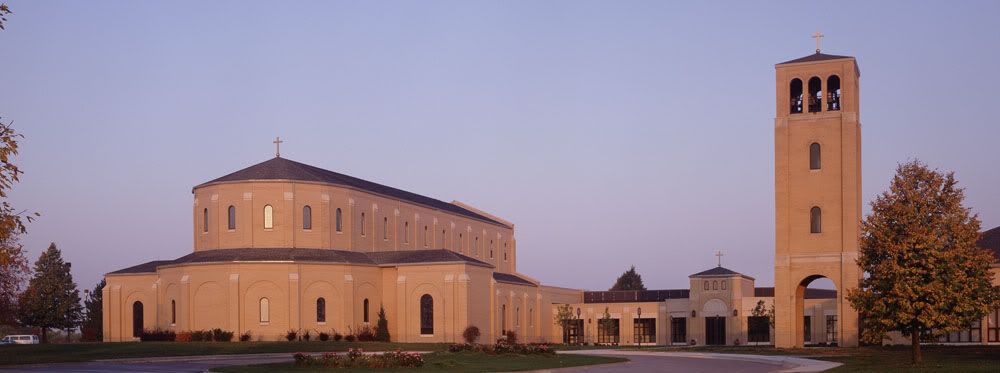
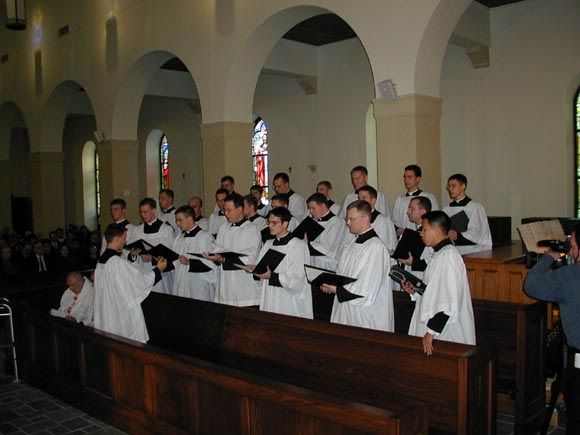
At St. Gregory the Great Seminary in Seward, NE, a place of study and preparation for young Catholic men interested in joining the priesthood, the bells in the tower ring signaling the beginning of mass in the Immaculate Conception Chapel. The upper-class seminarians wearing black cassocks that button from their chins clear to the floor, process down the center aisle of the nave, with two rows of 13 dark wooden pews on each side. They are followed directly by the college one, first-year seminarians dressed in black suits. Walking single file in two rows, the seminarians split in opposite directions in front of the alter and file into rows of the same dark colored pews set in the traditional style of inchoir seating that characterizes most monastic communities. The seminarians sit in eight pews, four on each side of the aisle. Each pew faces inward so that when the seminarians look straight ahead they see the other seminarians located directly opposite them on the other side of the aisle.
Three priests follow behind these seminarians wearing the green vestments of the ordinary times between the Advent, Lenten, and Easter seasons. They wear a white alb, an undergarment symbolizing purity; a green Stoll, a thin strip of cloth laid over their shoulders signifying their priestly vocation; and the green chasuble with a gold cross, the aesthetically pleasing outer layer of the vestments. They walk all the way to the front of the Chapel, the sanctuary, and take their seats to the right of the alter. The priests and seminarians sing the Latin hymn, “Quae caeli pandis ostium…” However, there is no accompaniment; the only sound comes from the men’s voices. It is a capella, a low but harmonized sound. The vibrations of their voices can be felt on the skin like a flies wings buzzing in the ear while they changed between notes in synchrony. Their incomprehensible Latin words and masculine song create a reverent and mysterious atmosphere. The words are completely foreign, and the men’s voices sound surreal and from a time period much too long ago. The order of their movements is so exact as they all turn together at the exact same times with mysterious, military like discipline. They seem to miraculously know each other’s thoughts and actions, and are therefore able to move, turn, sit, stand, and respond in unison. The seminarians sing back and forth to each other across the aisle in two-voiced harmony inchoir, one line at a time.
The Church, its architecture, and its art are incredibly beautiful. Every window in the chapel is stained glass and contains the image of a different saint, symbol, or religious object. St. Thomas Aquinas, patron saint of philosophers; St. John Vianney, patron saint of priests; St. Charles Borromeo, patron saint of seminarians are saints with special meaning at the seminary. They are painted mysteriously into the stained glass windows. Their faces seem to be looking towards the alter and the front of the Church, directing attention to where it is meant to be. It has been built, painted, and meticulously created to be mysteriously beautiful in every aspect, not to grab attention, but to make people wonder why they are here and to direct their attention back towards the front and upwards towards Christ, the answer to mystery.
Mystery is a common element in my everyday life as it is for most humans. It can be found in my shoelace that comes untied, in my homework assignments that have no apparent reason, and in my younger brothers sense of humor. Despite the apparent simplicity of these unknowns, they are essential to the human well-being and the continual development of society. They turn human attention toward a particular direction, expanding the ever-growing supply of human answers, knowledge, and inventions. Science, Philosophy, Religion, and many other areas of studied are based on the ambiguities and unfamiliarities in life. They deal with the unanswered questions and random whims or wonderings of human society. Mystery inspires action; it inspires some people to spend their lives studying one particular object or idea in search of an answer or explanation for the thing that mystified them.
There are some mysteries that neither I nor anyone one else will ever find the answer. Science can explain how the human genome, the colors of a rainbow, and the simplicity of a raindrop work, but they cannot know what sparked the creation of these things. Could they have all occurred by chance? Why are humans the only creatures with an intellect and will capable of making moral choices and having abstract thoughts? It is mysteries like these that have caused humans to turn to religion, to new mysteries that created answers for those of the past.
The beauty and mystery of many churches including the Immaculate Conception Chapel are efficacious symbols of the mysteries of God, faith, and religion. God, the gift of His incarnate son who was both God and man, His resurrection, and the Holy Trinity are all unexplainable unknowns to me. I have no human experience to compare these matters to, and consequently, I have no explanations about how they could be possible or true. They are spiritual mysteries that no scientific test or experiment could ever explain; however, they still cause me to ask questions and inspire me to take action. They motivate me to go to mass, to read the Bible, to pray, and to build my own beliefs about God and religion. They cause me to search for a reason to believe or have faith in God, to be a practicing Catholic, and to continue searching for answers. They like any other human mystery, inspire me to shift my attention and take initiative.
If there was no spiritual or physical mystery in my life, if I never asked questions, or if I never wondered about anything, my life would be meaningless. I would no longer have free will and the ability to choose. I would either know the answers to all the mysteries and be unable to make a wrong decision, or I would have no knowledge or past human experiences to base my decisions off. I would act the same way in each situation. My life would be a stand still without forward progress. My attention would never be turned in a new direction; I would take no action.
In a conversation I had with Fr. Lyle Johnson, a Catholic priest in the Diocese of Lincoln, he told me, “Unfamiliarity with God and spirituality causes humans to approach the Church kneeling in prayer with their eyes closed in reverence, much like humans approach strange, wild animals with care and caution.” Since I have no experience that can explain the mysteries of God, faith, and religion, the only way for me to experience God, to communicate with him, to find answers, and to build beliefs is to create my own mysterious human experiences and environments through activities like mass, prayer, meditation, and study.
In the chapel, the floor of the nave, the central section of the church where the public or lay people sit, is laid with tile. Each tile has the same soft shade of green, much the same color as a field of clover. Each tile has a different size and shape, and it was laid without any apparent pattern. The overall effect is that of a giant, disordered maze. Much like each new human mystery changes the focus of attention for one or many lives, each tile seems to point to a new direction within the maze.
I follow the tiles with my eyes, trying to find the answer to the endless maze. I finally find a path to the front of the nave, and notice that the tile on the stairs leading up to the alter in the sanctuary has a definite pattern. Each tile is a square of the exact same size, and they are lined up one next to the other. The straight path the pattern of these tiles makes leads my eyes to the base of the alter made of granite. Immediately, my attention is turned upward and I see the celebrant, the priest saying the mass, standing behind the alter with his arms raised in the air, his palms facing up. As I look around, I notice that the other seminarians and priests have their arms raised as well, and they all are saying together, “Our Father, Who art in…” I am the only one left out until I raise my arms, open my mouth, and reverently join into the mystery of the Mass at St. Gregory the Great Seminary in search of an answer.