Thursday, October 9, 2008

Life is a Mystery


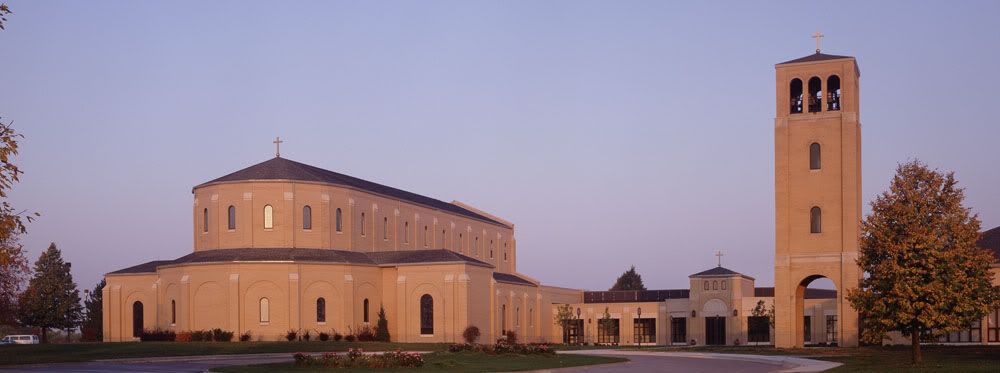
At St. Gregory the Great Seminary in Seward, NE, a place of study and preparation for young Catholic men interested in joining the priesthood, the bells in the tower ring signaling the beginning of mass in the Immaculate Conception Chapel. The upper-class seminarians wearing black cassocks that button from their chins clear to the floor, process down the center aisle of the nave, with two rows of 13 dark wooden pews on each side. They are followed directly by the college one, first-year seminarians dressed in black suits. Walking single file in two rows, the seminarians split in opposite directions in front of the alter and file into rows of the same dark colored pews set in the traditional style of inchoir seating that characterizes most monastic communities. The seminarians sit in eight pews, four on each side of the aisle. Each pew faces inward so that when the seminarians look straight ahead they see the other seminarians located directly opposite them on the other side of the aisle.

Three priests follow behind these seminarians wearing the green vestments of the ordinary times between the Advent, Lenten, and Easter seasons. They wear a white alb, an undergarment symbolizing purity; a green Stoll, a thin strip of cloth laid over their shoulders signifying their priestly vocation; and the green chasuble with a gold cross, the aesthetically pleasing outer layer of the vestments. They walk all the way to the front of the Chapel, the sanctuary, and take their seats to the right of the alter. The priests and seminarians sing the Latin hymn, “Quae caeli pandis ostium…” However, there is no accompaniment; the only sound comes from the men’s voices. It is a capella, a low but harmonized sound. The vibrations of their voices can be felt on the skin like a flies wings buzzing in the ear while they changed between notes in synchrony. Their incomprehensible Latin words and masculine song create a reverent and mysterious atmosphere. The words are completely foreign, and the men’s voices sound surreal and from a time period much too long ago. The order of their movements is so exact as they all turn together at the exact same times with mysterious, military like discipline. They seem to miraculously know each other’s thoughts and actions, and are therefore able to move, turn, sit, stand, and respond in unison. The seminarians sing back and forth to each other across the aisle in two-voiced harmony inchoir, one line at a time.

The Church, its architecture, and its art are incredibly beautiful. Every window in the chapel is stained glass and contains the image of a different saint, symbol, or religious object. St. Thomas Aquinas, patron saint of philosophers; St. John Vianney, patron saint of priests; St. Charles Borromeo, patron saint of seminarians are saints with special meaning at the seminary. They are painted mysteriously into the stained glass windows. Their faces seem to be looking towards the alter and the front of the Church, directing attention to where it is meant to be. It has been built, painted, and meticulously created to be mysteriously beautiful in every aspect, not to grab attention, but to make people wonder why they are here and to direct their attention back towards the front and upwards towards Christ, the answer to mystery.

Mystery is a common element in my everyday life as it is for most humans. It can be found in my shoelace that comes untied, in my homework assignments that have no apparent reason, and in my younger brothers sense of humor. Despite the apparent simplicity of these unknowns, they are essential to the human well-being and the continual development of society. They turn human attention toward a particular direction, expanding the ever-growing supply of human answers, knowledge, and inventions. Science, Philosophy, Religion, and many other areas of studied are based on the ambiguities and unfamiliarities in life. They deal with the unanswered questions and random whims or wonderings of human society. Mystery inspires action; it inspires some people to spend their lives studying one particular object or idea in search of an answer or explanation for the thing that mystified them.

There are some mysteries that neither I nor anyone one else will ever find the answer. Science can explain how the human genome, the colors of a rainbow, and the simplicity of a raindrop work, but they cannot know what sparked the creation of these things. Could they have all occurred by chance? Why are humans the only creatures with an intellect and will capable of making moral choices and having abstract thoughts? It is mysteries like these that have caused humans to turn to religion, to new mysteries that created answers for those of the past.

The beauty and mystery of many churches including the Immaculate Conception Chapel are efficacious symbols of the mysteries of God, faith, and religion. God, the gift of His incarnate son who was both God and man, His resurrection, and the Holy Trinity are all unexplainable unknowns to me. I have no human experience to compare these matters to, and consequently, I have no explanations about how they could be possible or true. They are spiritual mysteries that no scientific test or experiment could ever explain; however, they still cause me to ask questions and inspire me to take action. They motivate me to go to mass, to read the Bible, to pray, and to build my own beliefs about God and religion. They cause me to search for a reason to believe or have faith in God, to be a practicing Catholic, and to continue searching for answers. They like any other human mystery, inspire me to shift my attention and take initiative.

If there was no spiritual or physical mystery in my life, if I never asked questions, or if I never wondered about anything, my life would be meaningless. I would no longer have free will and the ability to choose. I would either know the answers to all the mysteries and be unable to make a wrong decision, or I would have no knowledge or past human experiences to base my decisions off. I would act the same way in each situation. My life would be a stand still without forward progress. My attention would never be turned in a new direction; I would take no action.

In a conversation I had with Fr. Lyle Johnson, a Catholic priest in the Diocese of Lincoln, he told me, “Unfamiliarity with God and spirituality causes humans to approach the Church kneeling in prayer with their eyes closed in reverence, much like humans approach strange, wild animals with care and caution.” Since I have no experience that can explain the mysteries of God, faith, and religion, the only way for me to experience God, to communicate with him, to find answers, and to build beliefs is to create my own mysterious human experiences and environments through activities like mass, prayer, meditation, and study.

In the chapel, the floor of the nave, the central section of the church where the public or lay people sit, is laid with tile. Each tile has the same soft shade of green, much the same color as a field of clover. Each tile has a different size and shape, and it was laid without any apparent pattern. The overall effect is that of a giant, disordered maze. Much like each new human mystery changes the focus of attention for one or many lives, each tile seems to point to a new direction within the maze.

I follow the tiles with my eyes, trying to find the answer to the endless maze. I finally find a path to the front of the nave, and notice that the tile on the stairs leading up to the alter in the sanctuary has a definite pattern. Each tile is a square of the exact same size, and they are lined up one next to the other. The straight path the pattern of these tiles makes leads my eyes to the base of the alter made of granite. Immediately, my attention is turned upward and I see the celebrant, the priest saying the mass, standing behind the alter with his arms raised in the air, his palms facing up. As I look around, I notice that the other seminarians and priests have their arms raised as well, and they all are saying together, “Our Father, Who art in…” I am the only one left out until I raise my arms, open my mouth, and reverently join into the mystery of the Mass at St. Gregory the Great Seminary in search of an answer.

Monday, October 6, 2008

Cubing Exercise

1. St. Gregory the Great Seminary in Seward Nebraska is the place that I observed. While observing, ideas about mystery, reverence, community, leadership,working together to a singular goal or moving in the same direction as a group, and the occasion of being to drawn to look up, turning or grabbing one's attention. My observations suggested that there was more to society and the everyday life I've been living. In the chapel, I was continually drawn to look up and my wandering eyes were always turned back to the same locations no matter what I was looking at; an effective way of turning my attention back to the focus. It also suggested that our communities maybe to individualistic and lack the teamwork/cooperative skills and abilities necessary to move our communities forward as a whole towards positive change. I was also surprised by the motivation of the seminarians compared to that of the general society, there studies, prayers, work, etc. are geared towards helping and improving the lives of others with no monetary or lifestyle gain from themselves. They are motivated to take action for the good of others rather than the good of themselves. At the seminary there was also a feeling of mystery or reverence. It seemed like I was supposed to be coming to this understanding that there is something more to life than jobs, skyscrapers, cars, and money. Although the mystery was never revealed to me, it was suggested that reverence towards this mystery was necessary and that lifelong search for the answers of this mystery were a necessary part of life.
2. The idea of mystery and reverence was created in the actions of the priests and seminarians during the mass. The occopello masculine voices that sang all the songs were new and unheard of to me. The incense filled my nostrils with new scents and the smoke aimlessly drifted towards the ceiling seemingly taking its prayers and etc. with it upwards.The architecture and art work were all beautiful, it seemed as though all the artwork and architecture continually directed my attention up and towards the front of the church. Somehow making myself think why this is. Does this happen in everyday life with other things? Is it supposed to? The symmetry, unison, and ease at which the seminarians and priests moved, spoke, and sang together added to the mystery as well as to the feel of community and importance of each part. Everyone seemed to know the correct responses at each part of the mass and said them at the appropriate rate and etc. I think that my basic sensory observations could be helpful in introducing my overall reflections

3.I think that the Church could be compared to a body. The body like the chapel is composed of many different limbs or parts, that are all connected to one central part pointing to the head. Each part has a different purpose as in the churches seats, alter, tabernacle, and etc, however both are like a community in that each part is necessary and important. Each part of the church like the body is mysterious. Why do you have that freckle or scar, how come you can bend like that, does your ear always look like that. At the same time these differences are almost always beautiful or lead to some unique gift/talent that is outstanding simply because of its uniqueness. Autistic musicians/artists, Communication between deaf and mute, slam dunks of high flying athletes, amazing footwork of fred astaire and other dancers.

4.To some people, my object can represent the whole purpose of life. To some people, it should be the most important part of life because it is the only reason we exist and have a chance at being fulfilled. These implications lead to the reverence discussed earlier, as well as some of the mystery. It is hard to understand... How can it be that important or that meaningful?

5. My subject is made of numerous parts... I guess the main parts would be the tabernacle, alter, nave, sepulcher, stain glass windows, priests, and seminarians. These are all parts of the church that have their own unique purpose, however, all are necessary for the overall goal of reverence and increased desire towards Jesus Christ and His Church, so much so that men are willing to teach and be taught how to spread this message throughout society.

6. My subject can be used as a quite place of meditation, as a place of worship, praise, thanksgiving, contrition, and supplication. It can also be used for mass, the praying of the rosary, stations of the cross, divine chaplet, Benediction, and etc. Some people believe it to literally be "The House of God", however, in this unique situation of a seminary being a part of the church, it is a place of study and learning, it is the arena for creating the priests or players in the faith who are empowered to spread God's word and message and bring the general lay populations offerings to Christ.

4.

Sunday, October 5, 2008

College Life

Photobucket
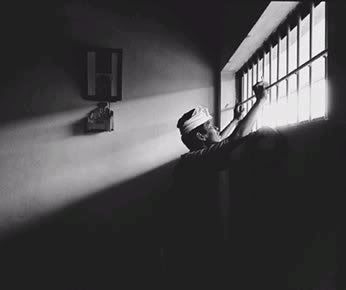
College life is supposed to be a time of new freedoms, new responsibilities, and new fun filled times. However, to me at times, it feels like a jail cell. It feels like I'm looking through the bars at all the things I could have and being laughed at because those things aren't possible for me write now. And the number one cause of this is... HOMEWORK! However, just like people are sent to jail to think about their crime, morals, and choices. I am currently in the situation where I need to think about my priorities, my study habits, and my procrastination tendencies. What things are important to me? Should I always try to do each assignment perfectly... Is it even worth it most of the time? Where does school work rank compared to family, friends, religion, sports? Why am I even in college and what am I supposed to be doing here?
At the moment... I don't really have answers for these questions. I still have those high school goals of getting A's on each and every test, project, and assignment. Is this even a health expectation. Is it possible for me and my personality to be happy with myself and still achieve those goals? I think that my friends and family are definitely more important than my school work in several situations... but what about those one's that are sort of on the edge of definite yes or no. How do I decide? Finally, what is college doing for me? I don't know if I should be trying to take classes for what I think at the moment could be my future occupation or take many classes to find what I'd like to do for my future occupation. I am very confused, and currently I am studying/worrying/participating in so many activities that I can't always do the fun things I see others doing. Ahhhh... Colllege!!!

Sunday, September 28, 2008

Singing in the rain

First of all, I tried for hours to get this video to embed into the text... But it wouldn't work. It wouldn't let me copy or type the embedded part into the box, I could only add videos that were saved to the computer. So this is a link to watch the video online and the embedded text thing you would copy into the box to make it show up on the blog.

http://www.dailymotion.com/video/x5tz0h_mint-royale-singin-in-the-rain_music


There is a tunnel with trash on the ground, and a man can be heard humming a tune. A black man appears and stretches as brass instruments begin to accompany the tune the man in the background that is humming. Percussion instruments join in the tune that can now easily identified as Singing in the Rain. The black man, now looking slightly more athletic in appearance begins to dance along to the music, limbs swaying gracefully along to the hymn with no abrupt stops in his movement. He bends over to tie his shoe as the music begins to slow. Suddenly the music speeds up and harsher, artificially created sounds replace the harmonized uniformity of the instruments and the mans voice. A personified being made of boxes, paper towel rolls, fast food cups, and broken kitchen appliances appears and challenges the black man to a dance off with jerky movements of limb that seem to be restricted to short quick motions lacking a fluid range of motion. The black man joins in, his movements at first graceful, uniform and seeming to blend with the background melodies; however, they eventually evolve to harsher movements like those of the being of trash. Both slow to a stand still as the music quiets and loses its upbeat tempo once again. The tune returns, this time much more upbeat like modern techno and Singing in the Rain can be picked out of the beat only with straining of the ear. Another trash being is created from the abandoned boxes and fast food lifestyle forgotten in the tunnel and joins the other two dancers as move like a 1990's boy band in an MTV music video. The song evolves rapidly and the beat quickens; more trash beings are being created exponentially, joining the dance now stripped of its choreography and symmetry, a nightlife atmosphere is created as the dancing has evolved to acrobatic break dancing characteristic of urban dance clubs; chaos and disorder run rampant though both the musical tune and the movements of the dance, yet is lost, the seen is now similar to a club, yet together they seem to unify the disorder into an image of elegance and meaning. The music slows one last type to a smooth polite tempo and the trash beings slow their movements to a standstill until their limbs of garbage return to the heaps in the tunnel. The man is left alone swaying easily along with instrumental music until it ends. The black man walks away.

My observatory piece combines content and form by mimicking the chronological order and complexity of the video. The music video begins simply without any elegant detail, likewise, my piece begins simple and devoid of adjectives. As the pace of the music quickens, adjectives and descriptions become longer and more vivid, accurately depicting the motion and complexity of the video. The number of people and their actions influence the way I present my observations. The dancers are described as a whole when they move together as one unit, but they are talked about individually while they are alone or doing their own unique thing. As the tune slows once again in the end, my piece concludes simply and without descriptive adjectives just as it began.